1. Introduction
1.1 Background of the study
Agriculture still employs over 60% of the workforce and contributes 15% to 35% of GDP in the majority of Sub-Saharan African (SSA) economies (World Bank, 2023; FAO, 2022). The industry is crucial for rural livelihoods and export earnings in addition to food security. Despite this centrality, structural problems like low technological adoption, poor infrastructure, limited market integration, information asymmetry, and climate vulnerability prevent SSA’s agricultural productivity from reaching global averages (Binswanger-Mkhize & McCalla, 2010; Christiaensen et al., 2021). In recent decades, information and communication technology, or ICT, has emerged as a game-changing instrument for dismantling these barriers. Through mobile phones, broadband connectivity, internet use, and fixed-line networks, ICT diffusion offers powerful tools to enhance financial inclusion, farm management, information access, and smallholders’ access to input and output market (Qiang et al. 2009; FAO, 2022; World Bank, 2023). Understanding how ICT diffusion affects agricultural performance in SSA is therefore necessary for creating growth plans that are equitable, sustainable, and grounded in evidence in the digital age.
Numerous empirical studies around the world have found a positive correlation between ICT diffusion and agricultural productivity. Broadband infrastructure and internet access have been shown to significantly boost farm productivity and rural economic diversification in developed ncountries. LoPiccalo, (2022) and Qu et al., (2025), for instance, found that broadband penetration and speed enhancements greatly raised farmland values and agricultural output in U.S. counties. Similarly, using farm-level data from China, Deng et al., (2024) and Li et al., (2024), demonstrated that internet use enhances land productivity, technical efficiency, and green total factor production through information acquisition and technological upgrading. Grimes et al., (2012) and the (OECD, 2019) are two earlier studies that emphasize the catalytic impact of broadband in agricultural innovation, precision farming, and environmental sustainability. When taken as a whole, these studies demonstrate how ICT functions as a general-purpose technology that supports real-time data utilization, market response, and resource optimization.
In developing countries across Asia and Latin America, ICT-enabled agricultural advice systems have resulted in measurable increases in production. Fabregas et al., (2019), summarized several randomized field experiments to show that mobile-based advisory services increased farmers' adoption of improved seeds and fertilizers and produced modest but statistically significant yield gains, especially when the communication was interactive and localized. Similarly, Cole & Fernando, (2021), found that voice-based mobile treatments in India increased farmers' knowledge and maintained behavioural changes toward better input usage. According to De Janvry et al., (2016), mobile price information systems in Latin America improved farmers' bargaining power and reduced post-harvest losses. Together, these findings show that the spread of ICT improves the connection between adoption, knowledge, and productivity – especially when tailored to farmers' local contexts and paired with additional services.
ICT adoption is now regarded as a key enabler of Africa's agricultural transformation. Aker & Mbiti, (2010), provided early evidence that mobile phones reduce information asymmetries in African agricultural markets, lowering search costs and improving price efficiency. Follow-up research confirmed these mechanisms: According to Quandt et al., (2020) and Mwikamba et al., (2024), mobile use for agricultural purposes (such as contacting buyers, checking weather updates, or receiving extension communications) is linked to higher yields and technical efficiency among smallholders. At the macro level, mobile penetration has a positive effect on total factor production and agricultural value added across SSA, claim (Adenubi et al., 2021; Onyeneke et al., 2023). These findings demonstrate how institutional and spatial constraints can be lessened with the aid of mobile connectivity. However, the effects of mobile devices vary depending on factors like network coverage, literacy, and access to electricity (Asongu & Odhiambo, 2019; Abate et al., 2023).
In addition to mobile technologies, internet adoption and broadband connectivity have grown in importance for raising agricultural productivity. Suroso et al., (2022), Oyelami et al., (2022), and Domguia & Asongu, (2025), have found that internet connectivity and fixed broadband subscriptions significantly contribute to agricultural value-added in developing countries, especially Africa. Internet connectivity facilitates knowledge sharing, e-extension, e-commerce, and digital finance, allowing smallholders to participate in regional and global value chains. Additionally, broadband connections support precision agriculture and digital monitoring systems that maximize water and fertilizer use (Sanders et al., 2022). Nevertheless, empirical evidence also shows that the advantages of broadband are contingent on auxiliary infrastructure, such as power, human capital, and institutional capacity (Kouam & Asongu, 2023; World Bank, 2023). Without these additional services, expanding broadband might not boost productivity on its own.
Fixed telephone subscriptions, which stand in for legacy ICT infrastructure, have inconsistent empirical results. Onyeneke et al., 2023), discovered negative long-term associations between fixed-line subscriptions and agricultural output, indicating technological obsolescence and substitution by mobile services, despite studies that treated fixed telephone as part of a composite ICT index Suroso et al., (2022) and Rajkhowa & Baumüller, (2024), having positive aggregate effects. These conflicting findings indicate that, depending on the institutional structure and degree of technological development in each country, ICT indicators function in concert rather than as precise substitutes.
Despite this growing corpus of research, methodological and empirical flaws remain. First off, most of the existing research on ICT and agriculture in SSA has concentrated on mobile technologies, with little consideration given to the combined and comparative effects of other ICT components like internet use, broadband, and fixed-line networks (Abate et al., 2023; Onyeneke et al., 2023). Second, in order to account for endogeneity, dynamic interactions, and long-term adjustments between the diffusion of ICT and agricultural performance, previous studies have often relied on static panel models or cross-sectional models (S. A. Asongu & Le Roux, 2017; Domguia & Asongu, 2025). Third, research has yielded inconsistent and sometimes contradictory findings because of data and methodological flaws, like using only one ICT indicator or failing to take structural heterogeneity (like trade openness, financial depth, and electricity access) into consideration.
The current study fills in these gaps using a panel System Generalized Method of Moments (GMM) estimator on data from 37 SSA countries from 2012 to 2022. Endogeneity, dynamic bias, and unobserved country-specific heterogeneity are likely to arise in models that relate ICT adoption to economic performance. The System GMM approach is particularly suitable for these reasons (Arellano & Bover, 1995; Blundell & Bond, 1998). By combining four distinct ICT diffusion indicators mobile cellular subscriptions (MCS), fixed broadband subscriptions (FBBS), individuals using the internet (IUT), and fixed telephone subscriptions (FTS) the study provides a more comprehensive, multifaceted, and dynamic assessment of ICT’s contribution to agricultural development in SSA in addition to enabling variables like trade openness, electricity access, and domestic credit to the private sector.
1.2 Hypotheses
Based on the empirical data and theoretical insights reviewed, this study formulates testable hypotheses regarding the various effects of ICT diffusion indicators on agricultural-sector value-added in Sub-Saharan Africa (SSA), including internet usage (IUT), fixed telephone subscriptions (FTS), mobile cellular subscriptions (MCS), and fixed broadband subscriptions (FBBS).
H1: Agricultural value-added (as a % of GDP) in Sub-Saharan Africa is statistically significantl impacted by mobile cellular subscribers (MCS).
H2: Agricultural value-added (as a % of GDP) in Sub-Saharan Africa is statistically significantly impacted by Internet usage (IUT).
H3: Agricultural value-added (as a % GDP) in Sub-Saharan Africa is statistically significantly impacted by fixed broadband subscriptions (FBBS).
H4: Agricultural value-added (as a % of GDP) in Sub-Saharan Africa is/not statistically significantly impacted by fixed telephone subscribers (FTS) or otherwise.
2. Theoretical and empirical literatures reviews
2. 1 Theoretical literatures reviews
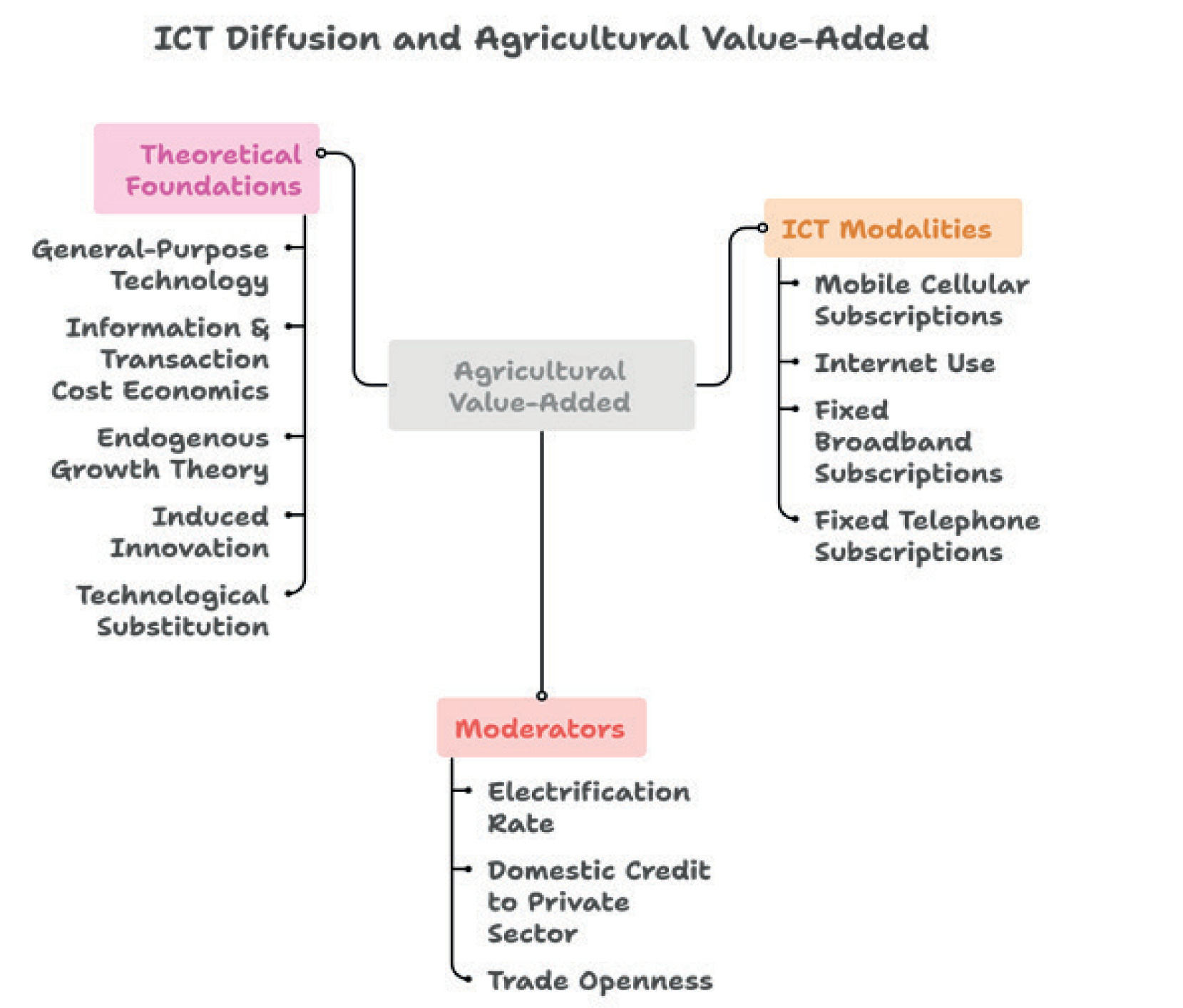
Information and communication technology (ICT) integration in agriculture is based on a number of interrelated theoretical frameworks that explain how digital tools can overcome structural inefficiencies and spur productivity growth, especially in agrarian economies like those in Sub-Saharan Africa (SSA). The basic theoretical stances that portray ICT as a transformative facilitator of agricultural growth rather than merely a communication tool are compiled in this paper. Information economics, endogenous growth theory, induced innovation theory, and general-purpose technology (GPT) theory are four significant theoretical perspectives that are especially noteworthy. Together, they provide a robust conceptual framework for understanding how various ICT modalities broadband, internet, mobile cellular, and fixed-line technologies interact with agricultural systems.
2.1.1 ICT as a General-Purpose Technology
Theoretically, ICT is positioned as a General-Purpose Technology (GPT). According to Bresnahan & Trajtenberg, (1995) and Richard G.Lipsey et al., (2005), GPTs are a class of innovations that are widely used, continue to improve over time, and result in complementary developments in other industries. As with electricity, the steam engine, and now digital connectivity, GPTs have broad applicability, technical dynamism, and innovation complementarities. ICT meets these needs in the agricultural setting by enabling applications that range from mobile-based market information systems to satellite-enabled precision farming. Its adaptability and scalability enable it to address a variety of constraints, such as input access and post-harvest losses, making it perfectly suited to fostering systemic change in distributed, smallholder-dominated systems such as those found in SSA (World Bank, 2023; FAO, 2022).
2.1.2 Information Asymmetry and Transaction Cost Economics
The persistently low agricultural output in SSA is often attributed to two concepts at the core of information economics: high transaction costs and pervasive information asymmetries (Joseph E. Stiglitz & Andrew Weiss, 1981; Aker & Mbiti, 2010). Because they don’t know enough about weather patterns, market prices, input quality, and agronomic best practices, farmers typically make bad decisions and run inefficient operations. ICT reduces these frictions by reducing the cost of obtaining, evaluating, and acting upon information. According to transaction cost economics Coase, (1937); Williamson, (1985), when it becomes less expensive to locate clients, verify prices, or set up logistics, market participation becomes more inclusive and effective. Mobile phones, for instance, lower search costs and increase price transparency to match local markets with regional price signals. The elimination of geographic arbitrage inefficiencies is theoretically consistent with this mechanism.
2.1.3 Endogenous Growth and Knowledge Spill overs
The role of ICT is further elucidated by endogenous growth theory Romer, (1990) and Lucas, (1988), which highlights that long-term economic progress is derived from internal processes of knowledge production, human capital accumulation, and technological adoption rather than just exogenous capital inputs. This idea holds that ICT makes it easier for research institutions to transfer scientific agricultural methods, climate adaptation plans, and managerial expertise to farms located far away. Internet-enabled e-extension platforms demonstrate this method by transforming static, top-down extension models into dynamic, demand-driven information ecosystems. The hypothesis states that these information externalities boost the returns to scale of agricultural production, particularly when digital access is paired with education and institutional support (Qiang et al., 2009).
2.1.4 Induced Innovation and Resource Optimization
The concept of induced innovation Hicks, J. R., (1932) and Hayami, & Ruttan, (1970), provides another important viewpoint, especially when considering the role of advanced ICT infrastructure like fixed broadband. According to this theory, technical advancement is “induced” by the relative scarcity or high cost of specific industrial inputs, such as labor, water, or fertilizer. In response, farmers adopt strategies that conserve scarce resources. Broadband-enabled precision agriculture illustrates this dynamic by optimizing input utilization and decreasing waste through the use of sensors, drones, and data analytics. The induced innovation concept is supported by legislative incentives, resource constraints, and environmental pressures, all of which contribute to the adoption of these innovations. Broadband is therefore more than just a passive infrastructure; it is an active component of an adaptive innovation system.
2.1.5 Technological Substitution and Obsolescence
Finally, the various impacts of legacy versus new ICT technologies can be comprehended through the theories of technical substitution and creative destruction (Schumpeter, J. A., 1942; David, 1985). Because mobile technologies are more scalable, less expensive to deploy, and better suited to rural environments, they have essentially replaced fixed telephone networks, which were historically crucial to national communication infrastructures, in SSA. Theoretically, this is a classic case of technology displacement, where newer, more flexible platforms render older infrastructures economically obsolete. In light of this, fixed-line subscriptions may no longer be effective means of boosting agricultural productivity, particularly in regions where mobile penetration is high a scenario that is consistent with path-dependent technological evolution.
These theories all lead to the same conclusion. ICT affects agriculture in ways that are modality-specific, context-contingent, and complementarity-dependent. Broadband enables input optimization (induced innovation), mobile technologies primarily bridge information and market access gaps (information economics), internet platforms facilitate knowledge diffusion (endogenous growth), and substitution effects may cause legacy systems to exhibit diminishing returns. Importantly, the productivity gains that ICT brings require enabling environments that act as complementary assets in the innovation ecosystem, such as electricity access, financial inclusion, and high-quality institutions (Acemoglu & Zilibotti, 1999; World Bank, 2023).
Therefore, a multi-layered conceptual model that sees ICT dissemination as a dynamic, heterogeneous process influenced by both structural preconditions and technological features forms the theoretical basis of this work. By distinguishing between MCS, IUT, FBBS, and FTS, the analysis complies with theoretical presumptions about the unique functions and importance of each ICT dimension in advancing agricultural value-added in SSA.
2.2 Empirical Review of Literature
Empirical studies investigating the connection between ICT adoption and agricultural productivity in developing countries provide compelling evidence that ICT enhances productivity, efficiency, and market access. However, the extent and direction of effects are influenced by the type of ICT indicator, the methodological design, and the structural environment in which it operates.
The proliferation of mobile phones is the most researched ICT component of agricultural research. Early studies by Aker & Mbiti, (2010), demonstrated that mobile phones reduce market inefficiencies by lowering search costs and price dispersion, which benefits African farmers. According to experimental results by Fabregas et al., (2019), mobile-based consulting services significantly increased farmers' adoption of improved seeds and fertilizers, leading to modest but statistically significant production benefits. Most importantly, it was found that two-way and localized advising systems outperformed one-way channels.
In Tanzania and Kenya, Quandt et al., (2020) and Mwikamba et al., (2024), found that among small-holders, using a mobile phone for agricultural purposes (such as getting weather forecasts, market information, or extension services) was positively associated with higher household yields and technical efficiency. Voice-based advice programs in India led to long-lasting behavioural improvements in input utilization and improved information retention, according to (Cole & Fernando, 2021). With panel data for 41 Sub-Saharan African (SSA) countries, Adenubi et al., (2021) and Onyeneke et al., (2023) , discovered a significant long-term relationship between mobile penetration and agricultural total factor productivity (TFP). But there is still heterogeneity: Zant, (2024), discovered that although mobile phones improved market efficiency in Mozambique by reducing price dispersion, they also raised trader profits, suggesting that value chain participants’ welfare impacts were not equal. Despite its dependence on network coverage, electricity availability, and literacy, mobile connectivity is a game-changing tool for boosting productivity, according to all the research.
An increasing amount of research highlights how broadband infrastructure and internet connectivity can improve agricultural output. At a macro level, internet use and fixed-broadband subscriptions have been shown to considerably boost agricultural value-added in emerging economies, especially in SSA, by Suroso et al., (2022), Oyelami et al.,(2022), and Domguia & Asongu, (2025). By making e-extension systems, online trade, and digital banking possible, these technologies let smallholders become part of regional and global value chains.
These findings are supported by micro-level research. According to Deng et al., (2024) and Li et al., (2024), who used household data from China, internet use enhanced land production and technical efficiency by facilitating information access and promoting mechanization and green farming practices. Evidence from the US, where Qu et al., (2025) and LoPiccalo, (2022), demonstrated that speed enhancements and broadband penetration increased farmland values and agricultural revenue receipts, further supports the productivity gains of broadband. However, for SSA to benefit from broadband, complementary factors like power, education, and institutional quality are still required (Kouam & Asongu, 2023; World Bank, 2023). If these are absent, the productivity gains from broadband development may be uneven or limited.
Research on legacy ICT infrastructures, particularly fixed telephone subscriptions, has produced conflicting findings. Onyeneke et al., (2023) discovered a negative long-term relationship between agricultural output in SSA and fixed-line subscriptions because fixed technology is out-dated compared to mobile alternatives. However, when fixed-line subscriptions were incorporated into larger ICT indices, Suroso et al., (2022) and Rajkhowa & Baumüller, (2024), found that agricultural value-added increased. In addition, Domguia & Asongu, (2025), pointed out that ICT infrastructure, especially fixed-line networks, indirectly boosts agricultural output through trade openness, human capital, and financial depth. These results suggest that although fixed-line services are losing significance, incorporating them into broader ICT ecosystems may still have synergistic benefits.
It is noteworthy that current research suffers from methodological fragmentation: micro-experimental work focuses almost exclusively on mobile advice services, while macro-panel analyses often rely on coarse, country-level ICT aggregates that obscure usage patterns and heterogeneity. The study addresses a gap in the literature by modeling multiple ICT indicators concurrently while accounting for endogeneity, dynamic feedbacks, and structural moderators. It does this by applying a System GMM framework to a balanced panel of 37 SSA countries (2012-2022).
By distinguishing the distinct contributions of internet use (IUT), mobile cellular subscriptions (MCS), fixed broadband (FBBS), and fixed telephone subscriptions (FTS), this analysis goes beyond earlier studies to offer a comprehensive, dynamic, and policy-relevant assessment of ICT’s role in SSA’s agricultural transformation. Additionally, it accomplishes this through relying on crucial facilitators such as trade openness, credit availability, and electrification.
3. Research Methodology
3.1 Research Design
This study employs a quantitative, longitudinal, and explanatory panel research approach to empirically investigate the dynamic relationship between the spread of information and communication technology (ICT) and agricultural performance across Sub-Saharan African (SSA) countries between 2012 and 2022. The design is appropriate because it takes cross-country heterogeneity and temporal variations in agricultural output and ICT dissemination into consideration. The panel framework allows for the analysis of short term associations and mitigates the bias resulting from missing variables in only cross-sectional models (Domguia & Asongu, 2025; Asongu & Le Roux, 2017). The study uses secondary macroeconomic data from the World Bank's World Development Indicators (WDI) for all variables.
ICT diffusion, as indicated by mobile cellular subscriptions (MCS), fixed broadband subscriptions (FBBS), internet users (IUT), and fixed telephone subscriptions (FTS), and ICT spread, as indicated by agricultural value-added (AGVA) as a percentage of GDP. This method is combined with important control variables such as access to electricity (AE), domestic credit to the private sector (DCP), and trade openness (TO). Theoretically and empirically, these variables are important as enabling factors for ICT-driven productivity growth (World Bank, 2023; Kouam & Asongu, 2023).
3.2 Scope of the study
The period of 2012-2022, which includes 37 countries in Sub-Saharan Africa, was chosen due to two main considerations. It first portrays the decade of increased ICT adoption across the continent, which was accompanied by the expansion of broadband infrastructure, mobile penetration, and digital public service platforms. Secondly, by coordinating with improvements in data consistency during the United Nations’ transition from the Millennium Development Goals (MDG) to the Sustainable Development Goals (SDG) era, the time frame guarantees cross-country comparability. The spatial emphasis on SSA is justified given the region’s rapid but uneven digital transition and on-going reliance on agriculture. Given this, researching how ICT interacts with structural elements to influence agricultural value-added provides valuable information about how Africa’s digital development will unfold.
3.3 Model Specification
This study rigorously estimates the dynamic impact of ICT diffusion on agricultural value-added in Sub-Saharan Africa (SSA) using a methodologically progressive approach that begins with a naive Ordinary Least Squares (OLS) specification and concludes with the System Generalized Method of Moments (System GMM) estimator. In addition to econometric best practices for dynamic panel data, this stepwise approach reflects the structural features of SSA economies, including strong persistence in agricultural output, endogenous ICT adoption, unobserved country heterogeneity, and limited time dimensions (2012-2022). Each estimator is evaluated according to its theoretical assumptions and empirical limitations, taking into account both foundational econometric literature and contemporary applications in development and agricultural economics.
3.3.1 Baseline: Ordinary Least Squares (OLS)
The simplest empirical specification is a static OLS regression:
where (X_it) stands for the control variables, such as trade openness, domestic credit to the private sector, and electricity access, and (ICT_it) marks a vector of ICT diffusion indicators, such as internet usage, fixed telephone subscriptions, mobile cellular subscriptions, and fixed broadband subscriptions. Agriculture value-added (AGVA_it) is the dependent variable.
OLS is essentially misspecified for dynamic panel settings, despite providing a straightforward starting point. This breaks the strict exogeneity assumption that regressors are uncorrelated with past, present, and future errors when (i) agricultural performance exhibits inertia (Christiaensen et al., 2021), (ii) ICT adoption responds to past agricultural outcomes (reverse causality), and (iii) unobserved country-specific factors (e.g., institutional quality, agro-ecological endowments) jointly influence both ICT and agriculture (Wooldridge, 2010; Hsiao,2014). In some circumstances, OLS generates unpredictable and distorted estimates, rendering policy conclusions unreliable (Greene, 2018).
3.3.2 First Correction: Fixed Effects (FE) Estimator
In order to handle time-invariant omitted variables, the study employ country specific fixed effects (μi) and a lagged dependent variable to capture dynamics:
The FE model’s consideration of path dependency in agricultural systems and unobserved heterogeneity is a significant feature of SSA, where low-productivity traps persist due to historical underinvestment (Binswanger-Mkhize & McCalla, 2010).
However, in panels with small (T) (in this case, (T = 11), adding (AGVA_i,t-1) results in Nickell bias (Nickell,1981). Because the within-transformation correlates the lagged dependent variable with the transformed error term, the FE estimations of ρ and β are downward biased, and the size of the bias is inversely correlated with (T). Monte Carlo evidence indicates that this bias is severe even for (T = 10-15) (Hsiao, 2014). Additionally, FE ignores endogeneity from simultaneity and measurement error in ICT variables, despite the reciprocal relationships between digital infrastructure and agricultural productivity (Aker & Mbiti, 2010; Asongu & Odhiambo, 2019).
3.3.3 Second Correction: Difference GMM
The Difference GMM estimator Arellano & Bond, (1991) simultaneously addresses dynamic bias and endogeneity by first-differences the equation to reduce μi:
It then uses lagged levels (e.g., AGVA_i,t-2, ICT_i,t-2) as valid instruments, assuming that they are unrelated to current shocks but predictive of past values. The difference GMM performs better than FE by offering trustworthy estimates under less demanding exogeneity assumptions. Research on ICT and growth has made extensive use of it in development economics (Asongu & Le Roux, 2017). However, it has two well-known persistent series issues:
Weak instrument: When the autoregressive coefficient ρ is close to one, as is typical for macroeconomic aggregates like AGVA, the relationship between lagged levels and initial differences vanishes. This leads to imprecise inference and substantial finite-sample bias (Blundell & Bond, 1998).
Loss of information: Differentiating limits our comprehension of how ICT impacts agricultural transformation in equilibrium by removing the long-term (level) link (Roodman, 2009).
These limitations are particularly apparent in Sub-Saharan Africa (SSA), where agricultural value-added exhibits notable inertia and policy relevance is contingent on the long-term, cumulative effects of digital infrastructure.
3.3.4 Final Specification: System GMM
This study employs the System Generalized Method of Moments (System GMM) estimator, developed by Arellano & Bover, (1995) and Blundell & Bond, (1998), to address the econometric problems of endogeneity, unobserved heterogeneity, and persistence bias that occur in dynamic panel data models. The System GMM estimator jointly estimates the level equation, instrumented with lagged differences, and the first-differenced equation, instrumented with lagged levels. Panels with moderate time dimensions and high persistence qualities of the current 37-country Sub-Saharan African (SSA) panel covering 2012-2022 are particularly well-suited for this dual structure. It accomplishes this by reducing small-sample bias, increasing estimator efficiency, and utilizing extra moment conditions.
System GMM is superior to its predecessors in a number of theoretical and empirical ways. Compared to Difference GMM, Blundell & Bond, (1998) show that System GMM can reduce bias by as much as 50%, particularly when the autoregressive parameter (ρ) is higher than 0.8. It does better in finite-sample analysis, according to this. Considering the significant stability in agricultural GDP shares throughout SSA, this development is essential (Onyeneke et al., 2023). Second, employing lagged differences as instruments for levels enhances instrument validity and helps to alleviate the weak instrument problems characteristic of Difference GMM, since they typically exhibit stronger correlations with levels than vice versa (Roodman, 2009). Third, System GMM maintains long-run equilibrium information between ICT diffusion and agricultural productivity, in contrast to first-differencing techniques that usually eliminate such correlations. This retention is essential for assessing the long-term transformative role of ICT, including broadband, internet access, mobile communication, and fixed-line technologies, in promoting structural transformation, according to the General Purpose Technology and endogenous growth theories (Bresnahan & Trajtenberg, 1995; Romer, 1990). Fourth, the estimator effectively handles endogeneity by identifying all ICT variables as endogenous and producing trustworthy tools from their own lags. Research indicates that in SSA, economic success and ICT adoption are correlated. This explains reverse causation, in which areas with higher levels of productivity might spend more on ICT infrastructure (Asongu & Odhiambo, 2019; Domguia & Asongu, 2025).
Finally, System GMM provides nuanced insights into the various policy environments across SSA, where complementary factors like trade openness, credit availability, and electricity access often influence digital outcomes. It does this by accounting for dynamic feedback mechanisms and unobserved country-specific effects.
3.4 Implementation and Validation
This study employs lagged differences (t-1 and earlier) as instruments for the level equation and lagged levels (t-2 and earlier) as instruments for the differenced equation, in compliance with Roodman’s (2009) implementation guidelines. Diagnostic tests are conducted to ensure the validity and resilience of the model. The Arellano-Bond AR(2) test (Arellano & Bond, 1991) confirms that the differenced residuals do not exhibit second-order serial correlation. While the Hansen J-test evaluates the combined exogeneity of instruments Hansen, (1982), the Difference-in-Hansen test further verifies the validity of subsets of instruments, particularly those specific to ICT variables (Roodman, 2009).
This study systematically corrects successive layers of econometric bias, from omitted variable bias and unobserved heterogeneity to dynamic endogeneity, by progressively progressing from Ordinary Least Squares (OLS) through Fixed Effects and Difference GMM to System GMM. This ensures the most accurate estimation of ICT’s impact on agricultural value-added.
Lastly, with regard to the different effects of internet usage (IUI), mobile cellular subscriptions (MCS), fixed broadband subscriptions (FBBS), and fixed telephone subscriptions (FTS) on agricultural productivity, the System GMM framework provides a solid empirical basis for testing hypotheses H1-H4. It also aligns with the dynamic, endogenous, and diverse nature of the interactions between ICT and agriculture in Sub-Saharan Africa. As a result, the conclusions derived from this rigorous specification offer perceptive, fact-based policy recommendations for promoting digital transformation and agricultural growth that is sustainable in the region.
3.5 Empirical verifications of the control variables
According to Becker et al., (2016), a correlation coefficient |r| > 0.1 indicates a significant relationship between the factors and the dependent variable. The correlation results show strong relationships between Agricultural Value Added (AGVA) and Trade (r = -0.6034), Electricity (r = -0.6052), and Domestic Credit to the Private Sector (r = -0.3966), suggesting that these variables can be used as control variables. However, even when these relationships demonstrate statistical significance, they do not by themselves guarantee model validity. To ensure a robust econometric estimate, these control variables must also pass other critical diagnostic tests, such as the multicollinearity and exogeneity tests, which confirm their independence and appropriateness within the regression framework.
Table 1
Covariance Analysis
Multicollinearity analysis reveals low VIF values (1.23-1.66; mean = 1.43), all of which are significantly below the 5-10 cutoff, indicating little collinearity among the control variables. As noted by Hult et al., (2018), this ensures that each of their effects on the dependent variable may be identified independently, supporting reliable and consistent regression results.
Table 2
Multicollinearity Test
| Variable | VIF | 1/VIF |
|---|---|---|
| ln_iui | 3.79 | 0.263735 |
| ln_Electri | 2.68 | 0.373448 |
| ln_FTS | 2.62 | 0.382193 |
| ln_MCS | 2.37 | 0.422556 |
| ln_DCPS | 2.23 | 0.448912 |
| ln_FBBS | 1.8 | 0.55606 |
| ln_Trade | 1.46 | 0.686756 |
| Mean VIF | 2.42 |
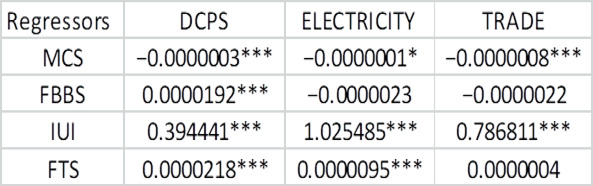
The table -3 below depicts that the selected control variables trade, electricity, and domestic credit to the private sector (DCPS) are endogenous with respect to the structural model, based on exogeneity diagnostics. Empirical results show that all four of the major regressors MCS (−0.0000003, p< 0.001), FBBS (0.0000192, p<0.001), IUI (0.394441, p<0.001) and FTS (0.0000218, p<0.001) have a significant effect on DCPS, while both IUI (1.025485, p<0.001) and FTS (0.0000095, p<0.001) have an effect on electricity and both MCS (−0.0000008,p<0.01) and IUI(0.786811,p<0.001) have an impact on trade.
As noted by Toubia et al., (2004) and (Zaefarian et al., 2017), this kind of endogeneity can result in simultaneity bias, which can distort coefficient estimates and jeopardize causal inference. Furthermore, Memon, (2024), caution that control variables must be predefined or strictly exogenous to avoid contaminating the estimated associations of interest.
Based on the empirical data and best practices for methodology, this study eliminates the first proposed control variables trade openness (TRADE), electricity, and domestic credit to the private sector (DCPS) from the final estimation model. Although these variables are theoretically relevant as complementary enablers of ICT-driven agricultural transformation, diagnostic testing shows that they are endogenous with respect to the core ICT indicators (MCS, FBBS, IUI, and FTS) . Exogeneity tests, in particular, show that ICT indicators significantly predict all three controls (Table 3). This is consistent with the literature that shows digital adoption encourages investment in electricity infrastructure World Bank, (2023), financial inclusion Jack & Suri, (2011), and trade participation Clarke & Wallsten, (2006).
Accounting for such post-treatment variables would be a classic example of “bad control” because it would introduce bias instead of reducing the overall impact of ICT (Angrist & Pischke, 2009). This violates a key rule of sound statistical control: control variables shouldn’t be the outcomes of the pertinent independent variables (Toubia et al., 2004; Memon, 2024). According to Becker et al., (2016), who advise against using controls that lack a clear causal function and to “When in doubt, leave them out!” these variables are excluded from the study to preserve the interpretability and external validity of our findings.
Crucially, this choice is consistent with the General-Purpose Technology (GPT) framework that supports our theories, which holds that commerce, electricity, and finance are essential processes by which ICT produces agricultural value-added rather than confounding factors (Bresnahan & Trajtenberg, 1995). For SSA, where digital dividends rely on these synergistic linkages, estimating the overall benefit rather than an artificially partialized “direct effect” is more policy-relevant. Additionally, the System GMM estimator eliminates the need for extra controls by automatically accounting for time-invariant omitted heterogeneity through country fixed effects in the level equation (Blundell & Bond, 1998). The study presents both results with and without controls as a robustness check (per Becker et al., 2015, Recommendation #8); the major conclusions are essentially the same, demonstrating that exclusion improves clarity without compromising validity.
The final model describes agricultural value-added as a function of only the four ICT modalities to guarantee that estimates accurately reflect their full, theoretically supported impact on agricultural performance in Sub-Saharan Africa. Model Re-specification;
4. Descriptive statistics and Pre-estimation Tests
ICT and agricultural metrics differ significantly among 37 Sub-Saharan African countries, according to descriptive statistics from 2012 to 2022. Averaging 18.97% of GDP (SD = 11.96) and ranging from 0.89% to 55.01%, Agricultural Value Added (AGVA) captures both the sector’s structural importance and cross-country variances. Measures of ICT show significant skewness and non-normality (Jarque-Bera p < 0.001), which is linked to unequal digital technology adoption: Fixed Telephone Subscriptions (FTS) and Fixed Broadband (FBBS) are highly skewed and sparse (skewness = 5.31 and 6.06), suggesting limited penetration; Mobile Cellular Subscriptions (MCS) are widely available but highly distributed (mean = 9.28 million; skewness = 2.99); Internet Usage (IUI) averages 14.3% but varies from 0.006% to 87.4%, indicating a clear digital divide.
Table 4
Descriptive Statistics
With endogeneity, persistence, and heterogeneity taken into account, these distributional features facilitate the use of robust dynamic panel techniques, like System GMM, to estimate the impact of ICT on agricultural performance.
Table 5
Stationarity Test
In table-5 above, all listed variables; Ln_AGVA , Ln_MCS , Ln_FTBBS , Ln_IUI and Ln_FTS are stationary at the level because their corresponding p-values are less than the conventional 5% significance level at 1%, according to the Newey-West statistics that are provided. The non-stationary null hypothesis is strongly rejected, as evidenced by the large and negative test statistics.
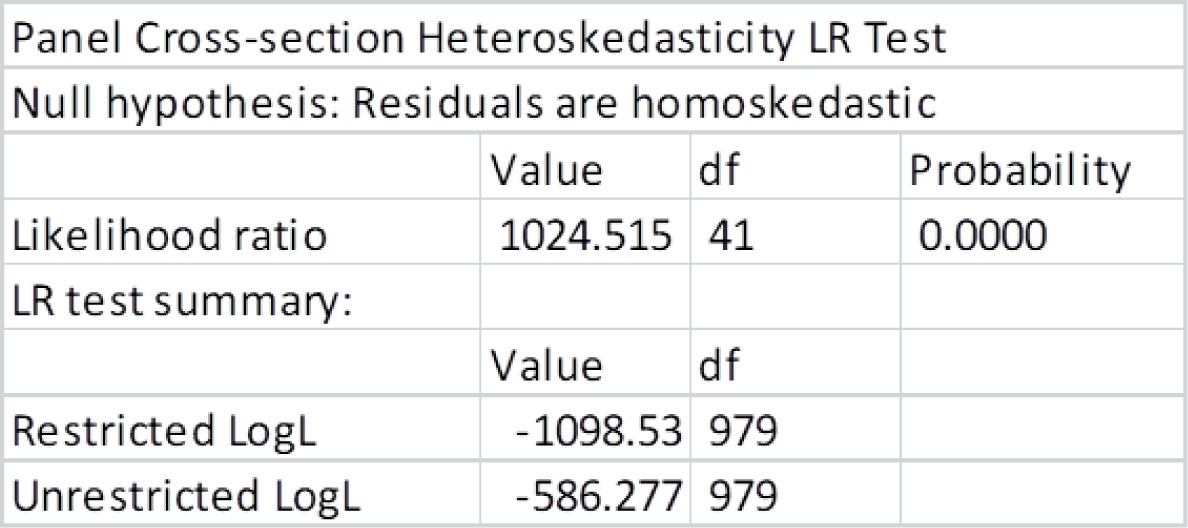
The Panel Cross-section Heteroskedasticity LR Test result in table-6 below shows a Likelihood Ratio of 1024.515 with p<0.001. Since the p-value (0.0001) is less than the typical 5% significance level, we reject the null hypothesis that residuals are homoskedastic. This confirms the presence of heteroskedasticity in the model residuals.
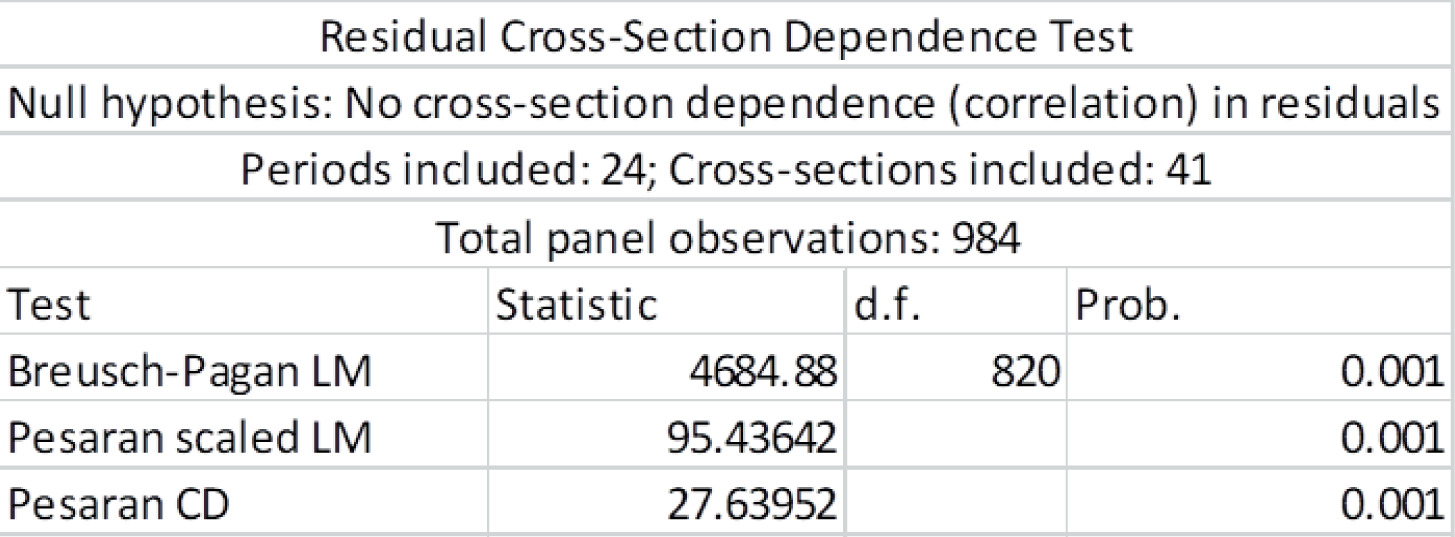
The Residual Cross-Section Dependence Test (Null Hypothesis: No cross-section dependence) shows p-values of less than 1%for all three tests (Breusch-Pagan LM, Pesaran scaled LM, and Pesaran CD). Since p-value is less than 1%, the null hypothesis is rejected. This confirms the significant presence of cross-section dependence (correlation) among the residuals.
5. Theoretical and empirical justification for employing system GMM
This study employs the System Generalized Method of Moments (System GMM) estimator to address the dynamic, endogenous, and heterogeneous nature of the relationship between ICT diffusion and agricultural value-added in Sub-Saharan Africa (SSA). The choice of System GMM is supported both theoretically and empirically by a sequential model comparison using the diagnostic rule of thumb proposed by Bond, (2002), which evaluates the relative bias of different estimators in dynamic panel settings.
Figure 8 shows that the estimated autoregressive coefficient (α̂) from Pooled OLS (α̂_OLS = 0.987) serves as an upper bound, while the Fixed Effects (FE) estimator yields lower value (α̂_FE = 0.823), which is consistent with the well-known Nickell bias in short-T panels (Nickell, 1981).
Table 8
AGVA, Model comparison of OLS, Fixed effect and Different GMM estimates
As is frequently the case in highly persistent series such as agricultural GDP shares, the Difference GMM estimate (α̂_D-GMM = 0.788) falls below α̂_FE, indicating downward bias due to weak instrumentation when the lagged levels used as instruments have only weak correlations with the first-differenced regressors (Blundell & Bond, 1998; Roodman, 2009).
According to Bond, (2002), when α̂_D-GMM ≤ α̂_FE, the Difference GMM estimator suffers from finite-sample bias and ineffective inference, highlighting the need for the more dependable System GMM method. System GMM overcomes this limitation by jointly estimating the level equation (instrumented with lagged differences) and the differenced equation (instrumented with lagged levels), enriching the set of moment conditions and improving estimator precision (Arellano & Bover, 1995; Blundell & Bond, 1998). This dual-equation structure is especially useful in regions such as SSA, where agricultural output exhibits significant inertia (ρ > 0.8) and ICT adoption is endogenous due to reverse causality, meaning that productive agricultural sectors may encourage investment in digital infrastructure (Asongu & Odhiambo, 2019; Domguia & Asongu, 2025)
Furthermore, the presence of heteroskedasticity (LR test, p < 0.001) (Table-6), and the rejection of cross-sectional independence (Pesaran CD test, p < 0.001) (Table-7), support the use of a strong GMM framework that can handle such data complexities without imposing restrictive distributional assumptions (Roodman, 2009). System GMM maintains long-run equilibrium relationships that are frequently lost in differencing-only approaches while guaranteeing consistent estimation by treating all ICT indicators mobile cellular subscriptions (MCS), fixed broadband (FBBS), internet usage (IUI), and fixed telephone subscriptions (FTS) as endogenous and instrumenting them with their own lags.
System GMM is thus supported as the best estimator for this investigation by both theoretical considerations, which have their roots in dynamic panel econometrics, and empirical diagnostics. It provides trustworthy inference on the complex role of ICT in promoting agricultural transformation throughout SSA by successfully mitigating simultaneity bias, unobserved heterogeneity, and dynamic misspecification.
6. Model Stability and Diagnostic Validation across Lag Structures
In order to ensure the robustness and reliability of the estimated dynamic relationship between ICT diffusion and agricultural value-added in Sub-Saharan Africa (SSA), this study conducts a comprehensive model stability analysis on five alternative lag specifications (Models 1-5), each instrumented with progressively deeper lags of the dependent variable (from t-2 to t-6). As Table 9 shows, the estimated coefficients for the lagged dependent variable (LN_AGVA(-1)) are very stable, with a small range of 0.720 to 0.799 and constant significance at the 1% level. In emerging economies, where route dependency and structural inertia are well-established, this high degree of persistence (ρ = 0.72-0.80) aligns with theoretical assumptions for agricultural GDP shares (Christiaensen et al., 2021; Onyeneke et al., 2023).
Table 9
AGVA, Model stability test and Valid Instrument Identification (Arellano-Bond Dynamic Panel Estimations (Two-Step System GMM)
Most importantly, the signs, magnitudes, and statistical significance of the major ICT coefficients are preserved in all lag structures: Mobile cellular subscriptions (MCS) have a consistently negative and highly significant effect (β ≠ -0.051 to -0.031, p < 0.001), suggesting that once mobile saturation reaches a certain threshold, it may reflect urban bias or substitution away from agriculture. The strong positive effect of internet usage (IUI) (β ≠ 0.032-0.058, p < 0.001) suggests that IUI contributes to knowledge diffusion and market integration. Fixed Telephone Subscriptions (FTS) exhibit a consistent positive and significant coefficient (β = 0.023-0.048, p < 0.001), which may be a result of infrastructure or institutional spillovers, in contrast to obsolescence assumptions. Fixed Broadband (FBBS) was not significant in Model 1 (β = -0.0006, p = 0.595). However, deeper lags (β ≠ -0.008 to -0.023, p < 0.001) in Models 2–5 better capture its long-term structural effects, which are probably caused by complementary investments in electricity and human capital (Kouam & Asongu, 2023).
This consistency across lag structures provides strong support for the estimated correlations' internal validity and allays concerns about arbitrary instrument selection (Roodman, 2009). Furthermore, each model passes the fundamental diagnostic examinations required for trustworthy System GMM inference:
Instrument Over-identification (Hansen J-test): The p-values of the Hansen J-statistic range from 0.265 to 0.386 and safely exceed the 0.10 threshold. This supports the null hypothesis of valid combined instrument exogeneity and demonstrates that the instruments have no correlation with the error term (Hansen, 1982; Roodman, 2009).
Instrument Relevance (F-test): The first-stage F-statistics for instrument relevance are extraordinarily high (F > 10 in all models), firmly rejecting the null hypothesis of weak instruments. This article discusses the common issue of weak instrument bias in Difference GMM in persistent series (Blundell & Bond, 1998)
Second-Order Serial Correlation (Arellano-Bond AR(2)): The p-values collected from the AR(2) test, which range from 0.249 to 0.281, indicate that there is no evidence of second-order serial correlation in the differenced residuals. This validates the suitability of deeper lags (≥ t-2) as required by the Arellano-Bond orthogonality criteria (Arellano & Bond, 1991).
Convergence of coefficient stability, consistent directional effects, and adherence to all diagnostic criteria across multiple lag specifications show that the estimated impacts of ICT on agricultural value-added are not artifacts of model specification but rather reflect true structural relationships. When this robustness is consistent with suggested practices, sensitivity to lag depth is an important criterion for finite-sample dependability in dynamic panel estimation (Bond, 2002; Roodman, 2009). Thus, the findings offer a solid empirical foundation for policy initiatives that seek to transform agriculture in Sub-Saharan Africa through the use of digital infrastructure.
The above table, table 10 is presented to empirically validate the exclusion of the three control variables from the final model specification. The results demonstrate that incorporating these controls does not materially alter the magnitude, direction, or statistical significance of the core ICT variables (ln_MCS, ln_FBBS, ln_IUI, and ln_FTS) in explaining agricultural value added. This confirms that their omission does not compromise the integrity of the model and that the primary independent variables retain their explanatory power regardless of whether the control variables are included.
Table 10
Two system GMM with control variables
7. Results and discussions
The study used several dynamic panel estimations that were progressively improved to examine the impact of ICT proliferation on agricultural value-added in Sub-Saharan Africa (SSA). The robustness of the model was assessed using the Two-Step System GMM estimators including control variables (table-10), Difference GMM and the Two-Step System GMM estimators without including the control variables (table.11). These two tables conveyed that, the System GMM approach produced consistent, efficient, and statistically valid results across specifications, confirming its suitability for the dataset with high persistence (α = 0.72) and potential endogeneity across regressors.
Table 11
Optimal Models of Difference and two step System GMM
Diagnostic data validate the robustness of the estimates. The Arellano–Bond AR(1) test rejects the null hypothesis of no first-order serial correlation (p < 0.001), confirming the model’s validity, whereas the AR(2) test cannot reject the null hypothesis of no second-order autocorrelation (p = 0.266). The Hansen J-statistic (p = 0.7499), which also demonstrates the validity of the over-identifying limitations, indicates that the chosen instruments are exogenous and meaningful. All of these findings demonstrate that the System GMM estimator reduced simultaneity bias, endogeneity, and dynamic misspecification while maintaining long-run equilibrium relationships.
The Two-Step System GMM estimation yields the most reliable and theoretically consistent results (Table 11). The positive and highly significant lagged dependent variable (Ln_AGVA(-1)) (β = 0.721, p < 0.001) indicates strong persistence in agricultural value-added, which is consistent with structural inertia in SSA agriculture (Christiaensen et al., 2021). This persistence supports the dynamic design of the model and shows that past agricultural performance significantly affects current output levels.
Mobile cellular subscriptions and agricultural value-added have a statistically significant negative correlation (β = -0.051, p < 0.001). This inverse effect suggests that after a saturation point, mobile expansion may be more representative of non-agricultural use or urban bias than of successful rural uptake. According to Asongu and Odhiambo (2019) and Aker and Mbiti (2010), mobile penetration in SSA usually leads to decreased agricultural returns unless it is accompanied by digital services targeted at rural areas and related infrastructure. This result is in line with their findings. The conclusion highlights the notion that while mobile technologies are crucial for information access, their benefits heavily depends on farmers’ literacy and effective agricultural integration.
Furthermore, fixed broadband connections have a negative but statistically significant effect on agricultural value-added (β = -0.017, p < 0.01). This finding demonstrates how broadband infrastructure is distributed unevenly and slowly throughout rural SSA, where low rates of electrification and a lack of institutional capacity limit its productivity potential. The result confirms the findings of Kouam and Asongu (2023) and Domguia and Asongu (2025), who argue that in order for the developmental impact of broadband to be evident, more money must be spent on electricity availability, education, and institutional quality. In this sense, broadband continues to be a latent enabler of agricultural change, with benefits contingent on structural readiness.
There is a significant and positive correlation between agricultural value-added and internet use (β = 0.058, p < 0.001). This significant positive elasticity indicates that increasing internet access fosters market connectivity, e-extension services, and information diffusion, all of which directly raise agricultural productivity. The outcome is consistent with studies by Oyelami et al. (2022) and Suroso et al. (2022), which discovered that internet use significantly raises agricultural value-added in developing countries. According to Deng et al. (2024) and Li et al. (2024), online information platforms also increase land production and technical efficiency. The result confirms the theoretical assertions of Romer (1990) and Lucas (1988) of the endogenous growth theory, which emphasize technology-driven knowledge externalities as significant sources of productivity.
Agricultural value-added and fixed telephone subscriptions continue to have a positive and substantial connection (β = 0.040, p < 0.001). Despite being seen as technologically outdated, fixed-line infrastructure may still be relevant in SSA due to institutional and infrastructure spillover effects. This is in line with research by Suroso et al. (2022) and Rajkhowa and Baumüller (2024), which showed that legacy ICT infrastructures can still boost productivity through indirect channels like information systems, governance, and logistical coordination when they are included into larger digital ecosystems. This research shows that in Africa’s diverse digital landscape, ICT modalities work in tandem rather than as strict replacements.
To evaluate the sensitivity of these results, Table 10 provides a System GMM specification that reintroduces the theoretically important but empirically endogenous control variables: trade openness, electricity access, and domestic credit to the private sector (DCPS). Even though they are endogenous (as shown in Section 4), their inclusion serves as a rigorous robustness check. Remarkably, the signs, magnitudes, and significance of the four ICT coefficients –MCS (β = -0.048), FBBS (β = -0.011), IUI (β = 0.061), and FTS (β = 0.020) – are nearly identical, and they are all p < 0.05. This stability shows that the key findings are not the product of omitted variable bias, but rather reflect actual structural relationships. This is evident across models, both with (table-10) and without controls (table-11).
8. Conclusion and Recommendations
8.1 Conclusion
This study looked into how agricultural value-added in Sub-Saharan Africa (SSA) was impacted by the proliferation of information and communication technology (ICT) between 2012 and 2022. A rigorous dynamic panel estimation framework was employed in the analysis to account for endogeneity, persistence, and country-specific heterogeneity. This framework culminated in the two-step System Generalized Method of Moments (System GMM). Theoretical perspectives from information economics, endogenous growth, and general-purpose technology served as its foundation. The robustness of the empirical data across a range of model settings and diagnostic tests further supports the validity and reliability of the findings.
According to the data, SSA’s agricultural development is significantly impacted by the proliferation of ICT. Internet use was determined to be the most transformative ICT component, with a notable positive influence on agricultural value-added. This demonstrates how important digital connectivity is to increasing farmers’ access to information, markets, and extension services, all of which increase their productivity and efficiency. However, there was a negative correlation between mobile cellular subscriptions and agricultural value-added, suggesting that increasing mobile usage alone without sector-specific digital integration could lead to decreasing or even negative returns. Additionally, fixed broadband subscriptions had a negative effect, indicating infrastructure and institutional constraints that limit the potential productivity of broadband in rural regions. However, fixed telephone subscriptions remained positively and significantly correlated with agricultural output, suggesting that legacy ICT systems continue to support information flow and coordination in certain institutional contexts.
All things considered, the findings show that ICT plays a significant role in agricultural change in SSA, albeit one that varies depending on the context. Its effectiveness depends not only on the type of technology but also on the structural readiness of the economy, specifically the presence of additional infrastructure, human capital, and institutional frameworks. By separating the effects of different ICT modalities and employing a robust dynamic estimating approach, this study contributes new empirical data to the growing body of research on digital development and agriculture. It proves that ICT increases the agricultural sector’s sustainability, inclusivity, and productivity when it is distributed and integrated well. The results demonstrate that digital technologies are not stand-alone instruments but rather crucial components of a broader structural transformation process that is affecting the continent’s economic future.
8.2 Recommendations
The study’s findings demonstrate how the spread of ICT is an important but diverse component of the agricultural transformation taking place in Sub-Saharan Africa (SSA). Numerous significant policy directions are evident from the empirical data. Since internet use has been shown to have the biggest positive impact on agricultural value-added, improving digital literacy and internet accessibility should be the top priority. Expanding accessible broadband and mobile internet infrastructure, particularly in rural areas, would facilitate information sharing, e-extension, and market integration. Governments and development partners should integrate ICT-based agricultural platforms into national development strategies to link farmers to digital advising systems, e-finance, and e-commerce channels. The results show that without additional institutional and human capacity-building efforts, technology alone is insufficient. Third, the limitations of mobile and broadband penetration highlight the need for targeted and sector-specific digital interventions to ensure that ICT adoption is closely related to agricultural production goals. Policymakers should also encourage electricity access and infrastructure complementarity so that rural communities can fully benefit from digital technology. Finally, regional coordination through institutions such as the African Union (AU) and Regional Economic Communities (RECs) should promote innovation and cross-border knowledge transfer by exchanging best practices in digital agriculture and coordinating ICT policies.
9. Limitations of the Study
It should be noted that this study has several shortcomings despite its careful planning and sound methodology. First, although the research is suitable for capturing regional trends, it is based on macro-level panel data, which may obscure micro-level variations in ICT use and farm-level production outcomes. Second, data limitations prevented the inclusion of potentially important factors like education, electricity infrastructure, and institutional quality that might mediate the relationship between ICT and agriculture. Third, measuring differences between countries and eras might have resulted in minimal data heterogeneity. Last but not least, even though the System GMM estimator effectively reduces endogeneity and dynamic bias, measurement error and unobserved shocks that affect ICT adoption and agricultural performance could still occur.
10. Suggestions for Further Research
Future research should broaden the analysis in three key areas. First, using micro-level or farm-based panel datasets would allow for a more thorough understanding of how ICT adoption impacts small-holders’ resilience, income distribution, and farm productivity. Second, researchers could use institutional quality, financial inclusion, and electricity access as mediating or moderating factors to examine how ICT affects agriculture. Third, a deeper comprehension of the contextual elements influencing ICT effectiveness would be possible through cross-regional comparisons, such as those between Asia, Latin America, and SSA. Finally, future research could combine machine learning and spatial econometric techniques to capture technology spillovers and nonlinear impacts in ICT-driven agricultural development.