1. Introduction
The waste management system envisioned for 2025 reflects a decisive shift toward circular economy principles, aiming to reduce environmental impact and enhance sustainability. Modern waste management systems have evolved to incorporate diverse technologies and operational strategies aimed at achieving efficient and sustainable waste handling from its generation to final disposal. This transformation is guided by the Waste Framework Directive’s ambitious recycling targets 55% of municipal waste by 2025 and 65% by 2035 (Suchowska-Kisielewicz & Jędrczak, 2023). Circular waste systems are projected to significantly reduce greenhouse gas emissions, as evidenced in China, where expanding coverage could raise mitigation potential from 35% in 2025 to 100% by 2035 (Li, 2024). In Barcelona, integrating urban agriculture with organic waste composting reduces fertilizer dependence and supports environmental savings (Arosemena et al., 2024). Preventing waste leakage into aquatic environments remains challenging but critical (Gómez-Sanabria & Lindl, 2024). Technological innovations such as IoT, AI, and automated sorting improve efficiency, emissions, and landfill diversion (Addas et al., 2024; Salem et al., 2023). Supported by life cycle assessments and decision support systems (Bisinella et al., 2023; Tirkolaee et al., 2024), the circular framework built on the 4R principles Reduce, Reuse, Recycle, and Recover advances sustainable waste management and contributes meaningfully to the Sustainable Development Goals by 2030 (Sondh et al., 2024; González-Sánchez et al., 2023).
1.1 India’s waste-management landscape
India generates approximately 62-64 million tonnes of municipal solid waste annually, a portion of which continues to be disposed of in open dumps or overcrowded landfills, leading to serious environmental and public health challenges (Ingale et al., 2024; Swathika et al., 2024; Ali et al., 2024). Waste management still relies on inefficient, hazardous manual sorting (Swathika et al., 2024), though sustainable shifts are emerging. Initiatives like Swachh Bharat promote awareness (Singh et al., 2024), IoT aids urban waste tracking (Ingale et al., 2024), and community-driven models show promise despite persistent infrastructure and regulatory gaps (Das, 2020; Ray et al., 2021; Basak et al., 2024). Efforts are also expanding to specialized waste streams such as e-waste, where extended producer responsibility (EPR) frameworks and awareness campaigns are slowly gaining traction (Verma & Tiwari, 2023).
1.2 Sustainable Entrepreneurship
Sustainable entrepreneurship in India is closely linked to the advancement of waste management systems, aligning environmental sustainability with inclusive economic growth. Government initiatives like Start-up India and the Green Skill Development Programme promote green innovation, especially among MSMEs, which are embracing Circular Economy principles and digital tools to enhance efficiency and reduce waste (Mondal et al., 2023). These enterprises support cleaner production but still face hurdles such as inadequate infrastructure and socio-economic barriers (Sharma et al., 2021; Jain & Shah, 2019). Nonetheless, municipal solid waste offers opportunities for energy recovery and composting, aiding progress toward sustainable development goals (Sharma et al., 2021). Integrating informal and formal waste sectors through public-private partnerships is key to managing challenges like e-waste (Verma & Tiwari, 2023). Recycling, composting, and waste-to-energy methods are vital for reducing landfill use, emissions, and resource depletion (Prabusankar, 2024; Balaganesh et al., 2023), supporting a sustainable, resilient future.
1.3 Sustainable Entrepreneurship in India through Effective Waste Management
Sustainable entrepreneurship in India, anchored in effective waste management, addresses environmental and economic challenges by promoting recycling, composting, and waste-to-energy practices that reduce landfill use and emissions (Prabusankar, 2024; Meena et al., 2023). The “waste-to-wealth” approach enables resource recovery and entrepreneurship, particularly among SMEs (Balaganesh et al., 2023). Sustainability refers to the implementation of practices that minimize environmental impact, promote resource efficiency, and ensure long-term ecological balance by reducing waste generation, enhancing recycling, and encouraging circular economy principles. This aligns closely with the United Nations Sustainable Development Goal (UN-SDG) 12, which emphasizes “responsible consumption and production” (United Nations, 2015). Specifically, sustainable waste management practices contribute to the achievement of SDG target 12.5, aiming to substantially reduce waste generation through prevention, reduction, recycling, and reuse by 2030. Progression towards this goal not only mitigates pollution and conserves natural resources but also supports broader SDGs related to climate action (SDG 13), clean water (SDG 6), and sustainable cities (SDG 11). Therefore, sustainable waste management is pivotal to advancing the UN-SDG agenda and fostering resilient, environmentally sound communities (Zaman & Lehmann, 2011).Despite progress, issues like inadequate infrastructure and low public awareness persist (Sharma et al., 2021). Scalable, low-cost technologies such as vermicomposting offer rural solutions (Patel et al., 2014), while IoT integration enhances efficiency (Ingale et al., 2024). A holistic strategy combining innovation, governance, and policy is vital for achieving SDGs (Meena et al., 2023).
1.4 Research Questions
1) What are the key factors that influence the effectiveness and efficiency of the waste management system?
2) To what extent is knowledge about health and safety measures shared among households, and how effective is this knowledge in promoting proper waste management practices?
3) What are the major challenges faced by entrepreneurs in implementing effective waste management practices?
4) How reliable and valid is the measurement instrument used to evaluate waste management practices?
1.5 Rationale for the study
Kokrajhar, Assam, was selected as the study area due to its unique socio-environmental context and growing challenges in municipal solid waste management. As a rapidly urbanizing town and the headquarters of the Bodoland Territorial Region (BTR), Kokrajhar faces increasing pressure on its waste management infrastructure. The region is characterized by diverse ethnic communities, varied income groups, and mixed urban-rural settlements, making it a representative case for studying household waste behavior in small but growing urban centers in Northeast India. Additionally, limited prior research on waste management practices in Kokrajhar and the broader BTR area highlighted a significant research gap that this study aims to address. The findings are intended to contribute both to academic knowledge and to practical policymaking for sustainable waste management in similar semi-urban contexts.
This study aims to comprehensively examine the waste management system by identifying and analyzing the key factors that influence its effectiveness and efficiency. It seeks to evaluate the extent and impact of knowledge sharing among households regarding health and safety measures through proper waste management practices. Additionally, the research investigates the primary challenges faced by entrepreneurs in implementing waste management practices. Finally, the study assesses the reliability and validity of the measurement instrument used to evaluate these practices, ensuring the accuracy and credibility of the findings.
2. Review of literature and hypotheses development
2.1 Effectiveness of waste management system
The effectiveness of waste management systems depends on economic, social, technological, and regulatory factors. Ownership structure, economies of scale, and inter-municipal cooperation improve cost-efficiency in municipal waste management, especially in the Czech Republic (Soukopová et al., 2017). Service quality, pricing, and collection frequency also affect expenditure and value. In Barishal, Bangladesh, socio-economic conditions, infrastructure, and institutional frameworks demand strategic planning (Abir & Datta, 2023). In South Africa, regulatory compliance and public perception shape commercial waste practices (Worku & Muchie, 2012). Curbside collection and community incentives improve efficiency in Czech municipalities (Struk, 2015). Globally, population density-based planning enhances service delivery (Russo & Verda, 2020). Technological advances, such as IoT and AI, streamline recycling and monitoring (Sulistio, 2024). Digital finance can support waste systems through transparency and accessibility (Kumar et al., 2024). Sustainable strategies and the Triple Bottom Line approach promote environmental, economic, and social balance (Sulistina, 2023; Gautam et al., 2023). H1: There is a statistically significant relationship between identified key factors and the effectiveness of the waste management system.
2.2 Effectiveness of knowledge sharing and proper waste management practices
Effective knowledge sharing on household waste management is shaped by education, infrastructure, and community involvement. Community empowerment programs improve awareness of hazardous waste, highlighting the need for multi-stakeholder efforts (Sitanggang et al., 2025). In urban India, homemakers show moderate knowledge but limited practices, calling for targeted education (A et al., 2022). Similar gaps exist in Ethiopia and the Philippines due to poor infrastructure and enforcement (Bidu et al., 2024; Eshete et al., 2023). Improper pharmaceutical disposal underscores the need for better guidance and access (Hiew & Low, 2024). Community-based interventions have shown success in improving practices (Ruhmawati et al., 2023), stressing the need for integrated strategies. H2: Knowledge sharing on health and safety measures has a significant impact on household adoption of proper waste management practices.
2.3 Challenges in the implementation of waste management practices
Entrepreneurs face diverse challenges in implementing effective waste management across sectors and regions. Globally, barriers include policy gaps, financial constraints, and societal resistance, especially in construction and manufacturing (Ferriz-Papi et al., 2024; Yakubu et al., 2024; Jerie, 2014; Llamas, 2024). In India, issues such as unscientific MSW handling, informal recycling, and poor segregation hinder technological adoption (Nixon et al., 2015; Kumar et al., 2024). Similar challenges persist in Sub-Saharan Africa, Indonesia, and Malaysia due to inadequate infrastructure, weak policies, and limited public awareness (Debrah et al., 2022; Nisa et al., 2024; Muhammad et al., 2023). Addressing these requires integrated strategies combining policy reform, investment, education, and entrepreneurial support.
2.3 (a)Inclusion of opportunities, models, or strategies for sustainable entrepreneurship
Climate change mitigation efforts have catalyzed demand for eco-innovative products and services, particularly in sectors such as renewable energy, sustainable agriculture, and circular economy solutions. The revised version discusses how global shifts such as the green economy transition, digitalization, and rising consumer awareness are creating new market opportunities for sustainability-driven ventures (Schaltegger & Wagner, 2011; Hall et al., 2010). We have integrated discussions of alternative business models that align profit with purpose, including: The circular economy model, which promotes resource efficiency and waste minimization (Murray, Skene, & Haynes, 2017), Inclusive business models that integrate underserved populations into value chains (George et al., 2012), and social enterprises that reinvest profits into social or environmental goals (Santos, 2012). To address the practical side of implementation, we have added strategic recommendations such as ecosystem collaboration (Cohen, 2006), leveraging hybrid financing mechanisms (Bocken et al., 2014), and engaging in cross-sectoral partnerships to scale impact. Entrepreneurial resilience and adaptability are also emphasized as core strategic capabilities in uncertain environments (Shepherd et al., 2021). H3: Entrepreneurs face statistically significant challenges in implementing effective waste management practices.
2.4 Assessment of waste management practices
Assessing the reliability and validity of measurement instruments for evaluating waste management practices requires the application of rigorous methodologies and validation techniques, as demonstrated in various studies. Instrument development typically integrates both qualitative and quantitative approaches to ensure a comprehensive evaluation framework. A tool designed to assess medical waste management performance in healthcare centers in Bandung incorporated 20 indicators and was validated through a study of 70 healthcare facilities, confirming its effectiveness in supporting healthcare accreditation processes (Wispriyono et al., 2022). In health institutions, the Turkish adaptation of the Solid Waste Management Scale was validated using exploratory and confirmatory factor analyses, achieving a content validity index of 0.98 and reliability coefficients between 0.59 and 0.73, affirming its relevance in evaluating nurses’ knowledge and attitudes (Er et al., 2021). Another study on workplace waste segregation behavior employed content validity indices and Cronbach’s alpha to confirm questionnaire reliability, obtaining strong expert consensus and robust internal consistency (Jalil et al., 2023). The Zero Waste Management Behavior scale in Turkey also demonstrated strong reliability (Cronbach’s alpha = 0.909) and was validated through confirmatory factor analysis, emphasizing the impact of knowledge and motivation on behavior (Coskun, 2022). Additionally, the application of the Analytic Hierarchy Process (AHP) in developing a solid waste management assessment tool exemplifies the utility of structured decision-making methods for evaluating management strategies (Batagarawa et al., 2015). H4: The measurement instrument used for evaluating waste management practices demonstrates high reliability and constructs validity.
2.5 Research Gap
The global waste crisis, intensified by rapid urbanization and inadequate waste management infrastructure, continues to challenge sustainable development, particularly where open dumping and land filling remain prevalent due to limited alternatives (Wen et al., 2009). While substantial research exists on urban and rural waste practices, critical gaps remain in understanding the multidimensional factors such as policy enforcement, institutional capacity, community engagement, and technology access that affect waste system performance, especially in semi-urban and resource-constrained areas (Guerrero et al., 2013; Ferronato & Torretta, 2019). Additionally, there is a scarcity of empirical studies exploring how household-level knowledge sharing influences health and safety in waste handling, particularly via community or digital networks (Zurbrugg et al., 2012; Gupta et al., 2015). Although entrepreneurship is acknowledged as a driver of innovation in waste management, challenges faced by small-scale entrepreneurs including limited financing, technological access, and regulatory barriers are underrepresented in the literature (Wilson et al., 2012; Sharholy et al., 2008). Furthermore, many studies employ unvalidated, context-insensitive assessment tools, raising concerns about the reliability and comparability of their findings (Yukalang et al., 2018). This study addresses these gaps by focusing on the intersection of entrepreneurship and waste management, aiming to identify inclusive, scalable, and contextually grounded solutions.
3. Research Methodology
3.1 Research Design
This study adopted a quantitative research design, utilizing a structured questionnaire to collect primary data from households in Kokrajhar, Assam, India. Quantitative methods are widely used in social science research to gather measurable data and analyze patterns in human behavior (Babbie, 2020).
3.2 Questionnaire Development
The questionnaire was designed following an extensive review of literature related to household waste management practices, public perception of municipal waste systems, and environmental behavior (Guerrero et al., 2013; Ferronato & Torretta, 2019). Each question was carefully worded to ensure clarity and avoid ambiguity. A five-point Likert scale (ranging from “strongly disagree” to “strongly agree”) was used to assess the degree of agreement or disagreement with statements, a standard approach in perception and attitude studies (Joshi et al., 2015). The instrument was reviewed by three academic experts in environmental management and social research for content validity before pilot testing.
3.3 Sampling procedure
The sampling frame consisted of households located within the administrative boundaries of Kokrajhar city, which includes both urban and peri-urban areas. The sampling technique employed is random sampling technique consistent with probability sampling methods. To ensure representativeness, the sampling frame consisted of households across multiple municipal wards in Kokrajhar, Assam. From this frame, households were selected using a random sampling approach, where household was selected after a random starting point within each ward. This ensured that each household in the target population had an equal and known probability of being selected. The selection was not based solely on convenience or availability, and the procedure adhered to principles of randomness as supported by Cre-swell & Creswell (2018). Participants evaluated various aspects of the waste management system using a five-point Likert scale, a common tool for measuring attitudes and perceptions (Joshi et al., 2015). Of the 600 questionnaires distributed, 526 were completed and returned, resulting in an effective response rate of 87.6%. Additionally, 43 questionnaires (8.17%) were returned incomplete, and 31 (5.89%) were not returned. Only fully completed questionnaires were considered for analysis. The reliability of the responses was evaluated using Cronbach’s alpha to ensure internal consistency, a recommended practice in survey-based research (Hair et al., 2019).
3.4 Pilot Study
Prior to the main survey, a pilot study was conducted with a sample of 50 households to assess the clarity, reliability, and usability of the research instrument (Presser et al., 2004). Participants received a brief explanation of the study’s objectives and were asked to complete the questionnaire. All 50 pilot questionnaires were returned, and the reliability of three key constructs was assessed: (1) Factors associated with the waste management system, (2) Knowledge sharing of health and safety measures through proper waste management, and (3) Challenges faced by entrepreneurs in implementing waste management. Each construct achieved a Cronbach’s alpha value exceeding 0.80, indicating high internal consistency and strong construct reliability (Nunnally & Bernstein, 1994). As the instrument was well-understood and effectively measured the intended variables, no modifications were necessary, and the original structure was retained for the full-scale study. These results confirmed the suitability of the instrument for use with a larger household sample in Kokrajhar city of Assam.
3.5 Ethical Considerations
All research procedures adhered to ethical standards for human subjects’ research. Informed consent was obtained from all participants prior to their involvement in the study. Each participant was given a clear explanation of the study’s objectives, the voluntary nature of participation, their right to withdraw at any point, and how their data would be used. No personally identifiable information was collected, ensuring anonymity and confidentiality. Respondents were assured that the results would be used strictly for academic purposes and policy recommendations, with no commercial use or dissemination of individual responses.
4.1 Reliability Testing
4.1.1 Factors affecting waste management system (WMS)
The reliability analysis of twelve questionnaire items addressing various aspects of waste management, evaluated using Cronbach’s Alpha a measure of internal consistency.
The table 1 presents all items recorded values between 0.880 and 0.916, exceeding the acceptable threshold of 0.70, which indicates excellent reliability across the instrument. These items span multiple thematic factors: Institutional Factors (effective implementation by local governments and mandatory policies), Social Factors (awareness of waste disposal and public education campaigns), Financial Factors (funding sources and private sector involvement), Economic and Technical Factors (job creation, maintenance costs, equipment availability, and skilled labor), and Environmental Factors (safeguarding resources and minimizing health risks). Notably, the item „Ensure human health risks minimization” achieved the highest reliability score of 0.916. The consistently high alpha values confirm that all questionnaire items are coherent, well-structured, and reliable for measuring the intended constructs, making the instrument suitable for use in the main survey without requiring any modifications or deletions.
Table 1
Reliability Testing
4.1.2 Sustainable Entrepreneurs in imposing waste management
Table 1 indicates that the Cronbach’s Alpha values for all variables range from 0.890 to 0.896, exceeding the acceptable threshold of 0.70 and demonstrating a strong level of internal consistency among the questionnaire items. This confirms that the items reliably measure their respective constructs, and as a result, no deletions or revisions were necessary. The analysis shows that all variables including “Lack of financial resources,” “Lack of access to technical knowledge of equipment,” “Lack of local government support,” “Lack of sufficient staff for handling waste management,” “Lack of communication with households regarding waste disposal,” and “Lack of public awareness” exhibited high reliability. Among these, “Lack of public awareness” recorded the highest reliability score. Therefore, all indicators were retained in their original form, affirming the questionnaire’s robustness and suitability for use in the main data collection process.
4.2 Results
4.2.1 Demographic Profile of the respondents
The demographic profile of the respondents in the context of waste management shows a predominance of female participants, with 357 individuals (67.9%) identifying as female and 169 (32.1%) as male. In terms of marital status, the majority of respondents are married, accounting for 383 individuals (72.8%), while 143 respondents (27.2%) are unmarried. This distribution highlights a significant representation of married women in the study sample.
4.2.2 Descriptive statistics
Table 8 presents the descriptive statistics for three key statements of knowledge sharing on waste management system and four key statements of safety measures by householdsto hygiene and waste management practices, offering insights into daily habits that contribute to environmental and public health.
Table 2
Mean and SD of Waste Management system
Table 3
Inter Correlation Matrix on Factors associated with WMS
| Factors | IF | SF | FF | EF | TF | ENF |
|---|---|---|---|---|---|---|
| IF | 1 | |||||
| SF | 0.889** | 1 | ||||
| FF | 0.916** | 0.852** | 1 | |||
| EF | 0.983** | 0.926** | 0.942** | 1 | ||
| TF | 0.915** | 0.879** | 0.888** | 0.908** | 1 | |
| ENF | 0.816** | 0.801** | 0.815** | 0.763** | 0.877** | 1 |
Table 4
Mean Ranks towards Factors associated with waste management system
Table 5
KMO and Bartlett’s Test waste management system
| KMO and Bartlett’s Test | ||
| Kaiser-Meyer-Olkin Measure of Sampling Adequacy. | 0.808 | |
| Bartlett’s Test of Sphericity | Approx. Chi-Square | 1699.458 |
| df | 15 | |
| Sig. | 0.000** | |
Table 6
Factor Loading Entrepreneurs Challenges for waste management
Table 7
Factor loading associated with the waste management system
Table 8
Latent Variables, Indicators, and Loadings
Table 9
Path coefficients
Table 10
Model Fit Indices
The mean score for the first statement is 2.88, with a standard deviation of 1.027, suggesting that respondents view poor waste disposal as moderately harmful. For the second statement the mean score is higher at 3.34 (SD = 1.177), indicating a strong perception that improper waste practices contribute significantly to groundwater contamination. Meanwhile, the third statement has a mean of 3.08 (SD = 1.125), reflecting a general agreement among respondents that inadequate waste management is linked to health problems. Notably, the highest mean score corresponds to the groundwater pollution statement, underscoring respondents’ heightened awareness of the environmental consequences of waste mismanagement. The first statement has a mean score of 3.72 (SD = 0.907), suggesting that this is widely perceived as a common and important practice. Similarly, the second statement yields a mean of 3.63 (SD = 1.022), reflecting a general awareness of the health benefits associated with consuming safe drinking water. The third statement records a mean of 3.74 (SD = 1.288), indicating that daily waste disposal is a relatively established habit among respondents. Most notably, the fourth statementhas the highest mean score of 3.86 (SD = 1.097), highlighting that this particular practice is perceived as both prevalent and crucial in maintaining household hygiene. These findings collectively point to an increasing awareness of hygienic waste management practices within the community. The relatively high mean scores across all four items underscore the community’s recognition of proper hygiene as an integral part of effective waste management.
4.3 Inter Correlation Matrix
The correlation analysis reveals strong and statistically significant positive relationships among the various factors influencing waste management.
Table 3 shows Institutional Factors exhibit high correlations with Social Factors (r = 0.889), Financial Factors (r = 0.916), Economic Factors (r = 0.883), Technical Factors (r = 0.915), and Environmental Factors (r = 0.816), all significant at the 1% level, indicating that institutional effectiveness is closely linked with other key components of the waste management system. Similarly, Social Factors show strong correlations with Financial Factors (r = 0.852), Economic Factors (r = 0.926), Technical Factors (r = 0.879), and Environmental Factors (r = 0.801), highlighting the importance of public awareness and community engagement. Financial Factors are highly correlated with Economic Factors (r = 0.942), Technical Factors (r = 0.888), and Environmental Factors (r = 0.815), suggesting that financial resources play a pivotal role in enabling economic development, technological advancement, and environmental protection within waste management. Economic Factors also display significant correlations with Technical Factors (r = 0.908) and Environmental Factors (r = 0.763), while Technical Factors are strongly related to Environmental Factors (r = 0.877). All these relationships are statistically significant at the 1% level, emphasizing the interdependent nature of institutional, social, financial, economic, technical, and environmental dimensions in shaping an effective and sustainable waste management system.
4.4 Association of factors with waste management system
Friedman test showsmean ranks and the significance of p-values, it is evident that there are statistically significant differences in how respondents perceive and rank various factors associated with the waste management system.
Based on the analysis of Financial Factors, the most highly ranked item was „Public education campaigns on waste management are conducted” (mean rank: 1.62), followed by „Waste generation and disposal are made aware” (mean rank: 1.38), with a p-value less than 0.01, indicating a significant difference in rankings. Within Economic Factors, „Jobs creation is encouraged” received the highest mean rank of 1.68, followed by „Requirements on long-term operating and maintenance costs” (1.32), again supported by a p-value below 0.01, rejecting the null hypothesis. For Technical Factors, „Requirement of Skilled Labourers” ranked highest (1.62), followed by „Availability of equipment and facilities” (1.38), with the p-value confirming a significant difference. Similarly, in Environmental Factors, „Ensure human health risks minimization” was ranked highest (1.57), followed by „Safeguard natural resources” (1.43), with a p-value below 0.01 indicating a meaningful distinction.
4.5 KMO and Bartlett’s Test
The results of the Kaiser-Meyer-Olkin (KMO) Measure of Sampling Adequacy and Bartlett’s Test of Sphericity confirm the appropriateness of applying factor analysis to the dataset concerning “Challenges faced by Entrepreneurs in imposing waste management.
The KMO value of 0.808, which is considered relatively high, indicates that the dataset has sufficient shared variance among variables, making it suitable for uncovering underlying factors. Additionally, Bartlett’s Test of Sphericity yielded a p-value less than 0.01, signifying statistical significance at the 1% level. This further validates that the variables are not unrelated and supports the existence of correlations suitable for factor extraction. Together, the high KMO value and the significant result from Bartlett’s test strongly affirm that factor analysis is not only appropriate but also a meaningful technique for examining the interrelationships among the identified entrepreneurial challenges in waste management implementation.
4.6 Structural Equation Modeling (SEM)
Structural Equation Modeling (SEM) was employed in this study due to its ability to analyze complex relationships among multiple latent variables simultaneously. The core aim of this study is to explore how household-level waste management practices influence entrepreneurial behavior and how these, in turn, support sustainable development. These constructs are inherently multidimensional and interrelated, making SEM an appropriate and powerful analytical tool. SEM enables the integration of measurement and structural models, allowing us to validate the constructs (through Confirmatory Factor Analysis) and test hypothesized relationships among variables within a single framework.
4.6.1 Factor Loading for Challenges faced by Entrepreneurs in imposing waste management
Table 6 presents the results of the Confirmatory Factor Analysis (CFA) measurement model used to assess the validity of the construct;it evaluates the relationships among six items comprising this construct, with the CFA loadings visually represented in the corresponding figure. All six items exhibited factor loadings above the accepted threshold of 0.70, indicating strong and significant associations with their underlying construct. This confirms the construct validity of the measurement model, demonstrating that each item effectively represents the entrepreneurial challenges in waste management.
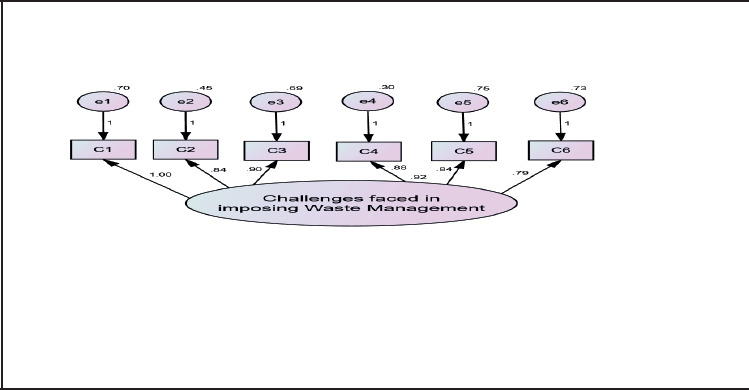
The validity values are as follows: Lack of financial resources scored the highest with a perfect validity value of 1.000, indicating a complete alignment with the construct. Other items also showed strong validity, including Lack of local government support (0.900), Lack of sufficient staff for handling waste management (0.880), Lack of access to technical knowledge of equipment (0.838), Lack of communication with households regarding waste disposal (0.840), and Lack of public awareness (0.790). All values are within an acceptable range, suggesting that each item meaningfully contributes to measuring the construct. Consequently, the validated model serves as a robust baseline for further cross-validation and provides a reliable framework for future research exploring these challenges.
4.6.2 Measurement Model of Various Factors associated with Waste Management
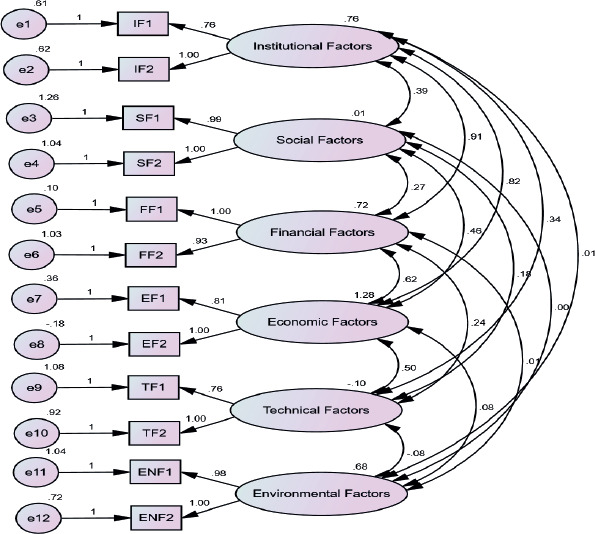
Table 7 presents the results of the Confirmatory Factor Analysis (CFA) conducted using SPSS AMOS software to evaluate the validity of the construct „Factors associated with the waste management system.” All six factor loadings exceeded the standard threshold of 0.70, indicating that each item has a strong and significant relationship with its respective construct. This confirms the convergent validity of the measurement model and supports the appropriateness of the items used to assess key aspects of waste management systems. Consequently, the finalized model is considered valid and serves as a reliable baseline for further cross-validation and future research on factors influencing waste management practices.
Table 7 presents the validity assessment of items included in the questionnaire on „Factors associated with the waste management system,” with each item evaluated for how well it represents the construct it is intended to measure. The validity values, which reflect the strength of the relationship between individual items and the underlying construct, range from 0.760 to 1.000, indicating strong and acceptable levels of construct validity across all items. Items such as IF2,SF2,FF1,EF2,TF2 and ENF2achieved a perfect validity value of 1.000, demonstrating a perfect fit with their respective constructs. Factor items,SF1 (0.990), ENF1 (0.980), and FF2 (0.930), exhibit very high validity of the constructs. Meanwhile, items such as EF1 (0.810), IF1 (0.761), and TF1 (0.760) reflect strong, though slightly lower, but still acceptable levels of construct alignment. Overall, the validity assessment confirms that each item effectively contributes to measuring the intended factors, thereby strengthening the overall measurement model’s accuracy, consistency, and reliability in evaluating the waste management system.
4.6.3 Factor Loadings of Various Factors associated with Waste Management
The table presents standardized factor loadings for various latent constructs associated with waste management, indicating how well observed variables represent their respective underlying factors. All constructs – Institutional, Social, Financial, Economic, Technical, and Environmental – demonstrate strong to perfect loadings, with most observed variables scoring at or near 1.00, signifying excellent alignment with their latent constructs. Specifically, variables such as mandatory laws and policies, public education, government funding, and long-term cost considerations show perfect loadings (1.00), reflecting their critical role in defining the respective constructs. Even the lowest loading (0.76) for indicators like local government implementation methods and equipment availability still falls within acceptable thresholds, affirming their validity. Overall, the data confirm that the selected indicators are strong and valid measures of the underlying factors influencing effective waste management.
4.6.4 Path diagram
The path diagram shows the correlations between different latent factors influencing waste management. Institutional factors have a strong positive correlation with economic factors (0.72), a moderate one with social (0.39), and weaker ties with financial (0.27) and environmental (0.24) aspects. Interestingly, its correlation with technical factors is unusually high (1.28), which may indicate a modeling issue, as correlations typically range between -1 and 1. Social factors correlate very strongly with financial ones (0.91) and moderately with economic (0.46) and technical (0.50) aspects, but show a weak negative correlation with environmental factors (-0.10). Financial factors show moderate to strong correlation with economic (0.62) and weak associations with technical (0.34) and environmental (0.08) factors. Economic and technical factors have a weak negative correlation (-0.08), while their relationship with environmental factors is negligible or non-existent (0.00 to 0.01). Overall, the strongest relationships exist between social-financial and institutional-economic linkages, indicating these are key connections in the waste management framework.
4.6.5 Model Fit Indices
The model fit indices presented in Table 5 suggest that the structural model for waste management has an overall acceptable to good fit. Key indicators such as the Comparative Fit Index (CFI = 0.942) and the Goodness of Fit Index (GFI = 0.910) exceed the recommended threshold of 0.90, indicating a good model fit. The Root Mean Square Error of Approximation (RMSEA = 0.045) is well below the 0.06 threshold, with its confidence interval (0.038–0.052) also within an acceptable range, signifying excellent fit. While the Chi-square to degrees of freedom ratio (χ2/df = 3.42) slightly exceeds the ideal value (<3.00), it is still within an acceptable range. The Tucker-Lewis Index (TLI = 0.87) falls just below the desired 0.90 but remains within a tolerable margin. The Standardized Root Mean Square Residual (SRMR = 0.09) is slightly higher than the ideal (<0.08), but still acceptable. Overall, these indices confirm that the model is statistically sound and adequately represents the data.
5. Discussion
This study investigated the key factors influencing the effectiveness of waste management systems, the role of knowledge sharing in promoting household health and safety practices, and the challenges faced by household from implementing waste management in Kokrajhar city, Assam. Through the use of a validated and reliable questionnaire, supported by statistical techniques such as Cronbach’s alpha, the study provides meaningful insights into the multidimensional aspects of waste management in a semi-urban Indian context. The findings from the inter-correlation matrix reveal strong and statistically significant relationships among institutional, social, financial, economic, technical, and environmental factors. These results reinforce the theoretical proposition that waste management is a complex system requiring the synergy of multiple dimensions to function effectively. Notably, institutional factors such as government enforcement and policy mandates were found to be highly correlated with technical and economic factors. This implies that the implementation of waste policies is closely tied to the availability of infrastructure, financial resources, and skilled labor. The Friedman test results highlight that within each category of factors, respondents placed differing levels of priority on specific items. For instance, under economic factors, job creation was ranked highest, suggesting that households view waste management not only as an environmental necessity but also as an economic opportunity. Similarly, among technical factors, the requirement of skilled laborers was prioritized, indicating the perceived need for professionalization and technical competency in the waste sector. The confirmatory factor analysis (CFA) further validated the measurement model used in this study. Items across all constructs – including those measuring entrepreneurial challenges and institutional efficiency – demonstrated strong factor loadings, all exceeding the acceptable threshold of 0.50. The strength of these loadings confirms the conceptual soundness of the measurement instrument, ensuring that the study’s findings are valid within similar socio-economic contexts.
An important dimension explored in this study is knowledge sharing on health and safety practices. The descriptive statistics indicate a moderate to high level of public awareness regarding the consequences of poor waste disposal, particularly its effects on groundwater pollution and children’s health. The mean scores for behaviors such as hand washing and daily garbage disposal were relatively high, the variability in responses suggests inconsistencies in behavioral execution. This finding aligns with previous literature (Sitanggang et al., 2025; Ruhmawati et al., 2023), which argues that knowledge alone is insufficient to drive sustainable household practices – support systems, infrastructure, and continuous public education are also critical.Regarding entrepreneurial challenges, the study confirms that entrepreneurs in the waste sector face significant barriers, including lack of financial resources, technical know-how, and government support. These findings are consistent with prior research in similar developing contexts (Yakubu et al., 2024; Llamas, 2024), which found that logistical constraints and regulatory hurdles significantly undermine entrepreneurial initiatives in waste management. The highest factor loading among these variables was recorded for “lack of financial resources,” underlining the critical need for micro-financing, public-private partnerships, and government incentives to enable sustainable waste entrepreneurship. Moreover, the KMO and Bartlett’s tests confirmed the adequacy and suitability of the dataset for factor analysis. With a KMO value of 0.808 and a highly significant Bartlett’s test result (p < 0.001), the study provides a robust statistical foundation for drawing meaningful inferences about the structure and interrelatedness of waste management variables. The demographic analysis shows a significant participation of married women, highlighting their central role in household waste management. This aligns with the gendered division of labor commonly observed in domestic settings across India. Therefore, policies and awareness campaigns must be tailored to engage women effectively, considering them as key stakeholders in community-based waste management initiatives.
The results of the structural equation model offer valuable insights into the key latent constructs that shape effective waste management. High factor loadings across all constructs confirm that the selected indicators such as government policies, public education, funding, job creation, and environmental protection are reliable and valid measures of their respective domains. The strong correlation between institutional and economic factors highlights the pivotal role of governance in driving economically sustainable waste practices. Similarly, the very strong correlation between social and financial factors suggests that public awareness and education are closely tied to funding and investment in waste management. However, the weak or negligible correlations involving environmental and technical constructs raise concerns, suggesting possible gaps in integration between environmental priorities and technical infrastructure in existing systems. Moreover, the unusually high correlation (1.28) between institutional and technical factors may indicate a model specification issue, such as multicollinearity or overfitting, warranting further refinement. Overall, the path relationships and model fit indices (CFI = 0.942, RMSEA = 0.045) indicate that the model is robust and statistically sound, providing a solid foundation for both theoretical understanding and practical policy formulation.
5.1 Policy Implications
The findings point to several critical areas for policy development. First, the strong institutional-economic link underscores the importance of robust governance structures and policy enforcement in enabling economically viable waste management systems. Policymakers should strengthen institutional capacity through clear regulatory frameworks and consistent implementation at local and national levels. Second, the high correlation between social and financial factors implies that investments in public education, community engagement, and awareness campaigns can significantly enhance financial sustainability by fostering public support for paid services and proper waste practices. Third, the weak correlation between technical and environmental factors suggests the need for better integration of environmentally sound technologies and skilled labor into waste management operations. Governments should prioritize the development and deployment of eco-friendly technologies and provide training to build a competent workforce. Additionally, potential issues in model specification highlight the need for further analytical rigor in future research and model refinement.
Waste management strategies must be framed within an integrated policy framework that balances environmental, economic, and social priorities. Policies should be aligned with broader national initiatives like the Swachh Bharat Abhiyan and the Smart Cities Mission, ensuring coherence between local and national objectives. One critical area for intervention is the recognition and integration of the informal sector. Informal waste collectors and recyclers play a pivotal role in managing household and commercial waste. Formalizing their role through training, equipment provision, and their inclusion in municipal waste systems can enhance coverage, efficiency, and generate employment opportunities. Policymakers should adopt inclusive models that bridge institutional and grassroots efforts. Furthermore, there is a pressing need to move beyond traditional public-private partnerships (PPPs) and embrace Public-Private-Community Partnerships (PPCPs). This approach emphasizes the inclusion of community-based organizations and Self-Help Groups (SHGs) in waste management contracts, monitoring, and service delivery. By involving local stakeholders in decision-making and accountability processes, such models ensure that waste solutions are locally owned and culturally relevant. Municipal authorities must invest in technologies and systems for real-time data collection on waste generation patterns, disposal methods, and resource utilization. These data systems are essential for effective planning, adaptive management, and evidence-based policy revisions. Managing household waste, gender-inclusive policies must be embedded in waste governance frameworks. This includes supporting women-led waste enterprises, ensuring gender-sensitive service design, and promoting women’s participation in waste-related decision-making processes. Gender mainstreaming in waste management can enhance social equity while improving environmental outcomes.
6. Conclusion
This study explored the multifaceted dimensions of waste management in Kokrajhar, Assam, focusing on the effectiveness of waste systems, knowledge sharing at the household level, and the challenges faced by entrepreneurs. Using validated instruments and rigorous statistical analyses, the findings demonstrate that waste management is a deeply interconnected system influenced by institutional, social, financial, economic, technical, and environmental factors. Households prioritize job creation, public education campaigns, and skilled labor as critical components of a successful waste management system. Additionally, while awareness of the consequences of poor waste disposal is relatively high, practical application of safety and hygiene practices remains inconsistent, suggesting the presence of behavioral and infrastructural gaps. The study highlights the importance of comprehensive and inclusive strategies backed by sound policy, robust infrastructure, and community engagement to strengthen waste management practices in semi-urban and developing regions.
Households face significant challenges in the form of financial constraints, limited government support, and lack of technical capacity. Kumar et al. (2024) utilized a fuzzy AHP approach to assess reliability in financial services, this method can similarly enhance waste management practices by systematically evaluating and prioritizing key factors, improving the reliability, efficiency, and strategic planning of sustainable waste management systems. This study confirms that waste management is a multidimensional challenge, heavily influenced by institutional strength, public awareness, financial investment, economic opportunities, technical infrastructure, and environmental stewardship. The high validity of the observed indicators and the acceptable to excellent model fit indices provide confidence in the reliability of the findings. The strong relationships among key factors, particularly institutional-economic and social-financial linkages, suggest targeted areas for intervention. Policy frameworks should aim to harmonize institutional, financial, and social strategies while addressing technical and environmental integration gaps. Ultimately, a holistic and evidence-based approach is essential for building effective and sustainable waste management systems.
Based on the study’s findings, several strategic recommendations are proposed to enhance the effectiveness and sustainability of waste management systems in regions like Kokrajhar, in Assam. First, institutional capacity must be strengthened by ensuring that local governments actively implement and monitor waste management policies, with strong coordination between municipalities, panchayats, and urban local bodies to streamline service delivery. Second, public education campaigns should move beyond awareness and focus on behavioral change, especially in the areas of hygiene, waste segregation, and environmental responsibility. Third, there is a need to promote skill development and employment by launching training programs that equip waste workers and entrepreneurs with technical and operational competencies, thereby improving service quality and livelihood generation. Fourth, access to finance for waste entrepreneurs must be facilitated through financial incentives, low-interest loans, and innovative public-private partnership models to address funding barriers. Fifth, community-based waste management models should be encouraged by leveraging the participation of women and local groups to create decentralized, contextually relevant solutions. Sixth, investments in infrastructure and technology are essential, particularly in smart systems like IoT-enabled waste bins and AI-based scheduling tools that can increase operational efficiency and reduce collection costs. Finally, there is a need to promote research and innovation in the waste management sector by fostering collaboration among universities, NGOs, and startups to develop new solutions for recycling, waste-to-energy conversion, and sustainable material use. These recommendations collectively aim to create a more inclusive, efficient, and technologically advanced waste management ecosystem.